
North Avenue
There Are Thousands of North Avenues in the United States


Dear Republic,
Today we have a lovely, if heartbreaking meditation on his father by Damon Falke.
-ROL
NORTH AVENUE
It has been months now since my father died. I keep searching for anything I can remember about that time. I am trying to discover a chronology and save some of the details. I am uncertain about why any of us cling to one memory or another. I have a friend Dallas who took up woodcarving after his father died. He said that the barbershop where his father had his hair trimmed had been owned by a woodcarver. The man cut hair and carved wood. He was a decent woodcarver from what Dallas remembered. He carved bears and wolves. He carved birds of all kinds, though especially eagles. He said the barber carved a fair likeness of John Wayne, too. As far as Dallas knew, his father had never whittled as much as a toothpick, but then Dallas took up woodcarving. He said his Daddy would have been proud of him. He told me that he never called his father Daddy until after he died, which makes sense.
I think about the drives I made around the time of my father’s passing. I was with my parents for eight weeks before Dad died. Afterwards, I spent another six weeks with Mom. In all that time, I drove to the grocery store, the pharmacy, the post office. I drove to pick up food, to rummage for clothes at Goodwill. I made a trip to Lowes with my mother to buy spring flowers and 12 bags of potting soil. Dad hardly left the house in his last weeks. In the end, he couldn’t leave the house at all. He couldn’t walk from the living room to the kitchen without falling. He would try. He shuffled his way towards the kitchen, but by the time he reached the dining room table, which was maybe four steps away from his recliner, he needed to sit down again. Mom and I helped him back to his chair. It wasn’t long before we helped him back to bed.
Driving was something Dad did a lot when he was younger and much healthier. He loved to drive. Because I was a sick kid and often at home, I ran errands with him. We made up this game called “Fine Car.” The object was to spot the best-looking car on the road and yell out “Fine car!” I never cared for Hot Wheels or Tonka trucks, but I loved riding with Dad and spotting the fine cars. Sometimes we’d go to places unplanned, like to a coffeeshop or a Chinese restaurant that he had heard about. He liked places and people whom he found to be funky. He liked the word “funky.” He might have said, for instance, “That’s a funky looking business over there,” while pointing to a costume shop or a novelty store. “He’s a funky looking guy,” signaling, as he did one day in Galveston, Texas, to a man covered head-to-toe with tattoos, wearing rope sandals, a fez, and a kilt. “He’s funky.” Dad assured me that it was serendipitous for us to travel like we did. Later, after the bank statements arrived and landed in my mother’s hands, he would tell my mother, “Me and the boy are serendipitous.” “You’re expensive,” she said. “I like to think we’re more serendipitous.” “Fine.”
There was one trip when Dad drove us 140 miles out of the way. He wanted to see if the old grocery store and boarding house that his favorite uncle had operated was still standing. Off we went! Dad drove, and I stayed on the lookout for fine cars. We got to the village where his uncle had lived, and Dad thought he recognized the building. It was nearly all that remained of downtown. And what once had been a coat of fine red paint had been mostly stripped to wood. There was an upstairs that Dad decided was the boarding house. We peeked through the front windows with our hands cupped to the sides of our faces. We couldn’t see anything, though Dad thought it was the right place. We hung around for a while, probably to let Dad gather whatever memories he needed. We also walked the railroad track on the other side of the road. Not many boys get to walk railroad tracks with their fathers. He told me then, as he would tell me for years, how his uncle took him to beer joints when he was a little boy. Dad enjoyed recalling the big breasted waitresses who picked him up from the bar and danced with him to Hank Williams songs. Hank Williams and Lefty Frizzel. He told me that he could have been smothered to death in the arms of those big breasted women. “But that would have been alright,” he said. Then we headed home. “Don’t tell your mother I brought you down here.” “Why would I do that?” “I don’t know but don’t tell her.” I didn’t tell her. I never did.
But Dad was dying, and he couldn’t drive anymore.
One evening near his end, I walked into the living room, and I didn’t know what I was thinking. Maybe I was thinking Dad had gone to bed, but I wore a clean pair of slacks and a button-up white shirt.
“Where are you going?” Dad asked.
I suddenly realized how I was dressed.
“Where are you going?” He asked again.
“I’m thinking about going to the bookstore.”
“The bookstore?”
“I was thinking about it.”
He glanced at Mom, who sat on the couch next to his chair. Then he looked at me again.
“Well let’s go,” he said. “I’ll get dressed and we can go.”
I noticed that my mother’s hand was pressed against her chin.
“Don—”
“What? What do you want?”
“You can’t go to the bookstore, Honey.”
Dad looked stunned. Like something blunt and heavy had hit him.
“I can’t go to the bookstore?”
Mom shook her head. Her hand, which still cupped her chin, now covered her lips, too.
“Well why the hell not?”
“You can’t walk, Dad,” I said.
“I can’t walk?”
“You know you can’t walk. You couldn’t make it across the parking lot.”
A silence set in, and Dad stayed in his chair. A blanket covered the lower half of his body. He was naked except for the blanket. His body was emaciated, wounded. The line of the catheter protruded from under the blanket and ran to the floor where the collection bag set. He adjusted his glasses and brought the book he’d been reading up close to his eyes again. His glasses were too large for his face. He kept shifting the angle of the book so he could see better.
These months later, searching for details, I wonder if I had been driving to the bookstore or away from it when I realized that I was on North Avenue. I had started the process of removing books from Dad’s library. This was at my mother’s request. I felt reluctant to get rid of any of Dad’s books, especially his theology books. As I went through them, I imagined my father as a young man, in his early twenties, reading volumes of theology. He was training himself to be a preacher. He underlined in his books. He highlighted passages. He scribbled in the margins. I couldn’t give those books away so easily. They were too close to how Dad became Dad. Instead, I got rid of his mystery books, not all of them but a box or two. Nearly all of those books I gave away were unread. The receipts were inside most of them. They were in great condition, too. Someone would want them. Maybe the owner of the bookstore, Margie, could make a little money from them, too. I have never been a mystery reader, but there were books I kept and will eventually read. Dad had 7 copies of Death on the Nile, 7 copies of The Mysterious Affair at Styles, 5 copies of Murder on the Orient Express, 6 copies of The Complete Sherlock Holmes. He had purchased editions with different covers, different fonts, different illustrations. And of course he read them. I like to believe that when my father read his mystery books he was transported to an elegant train car or a robust study or a grand countryhouse where he would be smartly dressed and alone with only hours to read and to scribble in his unfinished journals. While taking care of him, I read Agatha Christie’s The Mysterious Affair at Styles. It is Agatha Christie’s first detective novel and the first novel in which Hercule Poirot appears. Dad noticed that I was reading it. “That’s a good one,” he said. “It has a good start,” I replied. “Do you like it?” “I’m early in the book, but I can tell that I like it.” “That’s good” He started to turn away but hesitated and said, “William Shakespeare and Agatha Christie are the two greatest writers of the English language.” That was all he said. Then he returned to whatever book he was reading. I am not sure that I agree with him, but I am sure that it doesn’t matter. Dad loved the works of Shakespeare and Agatha Christie, and that was enough for me not to say anything.
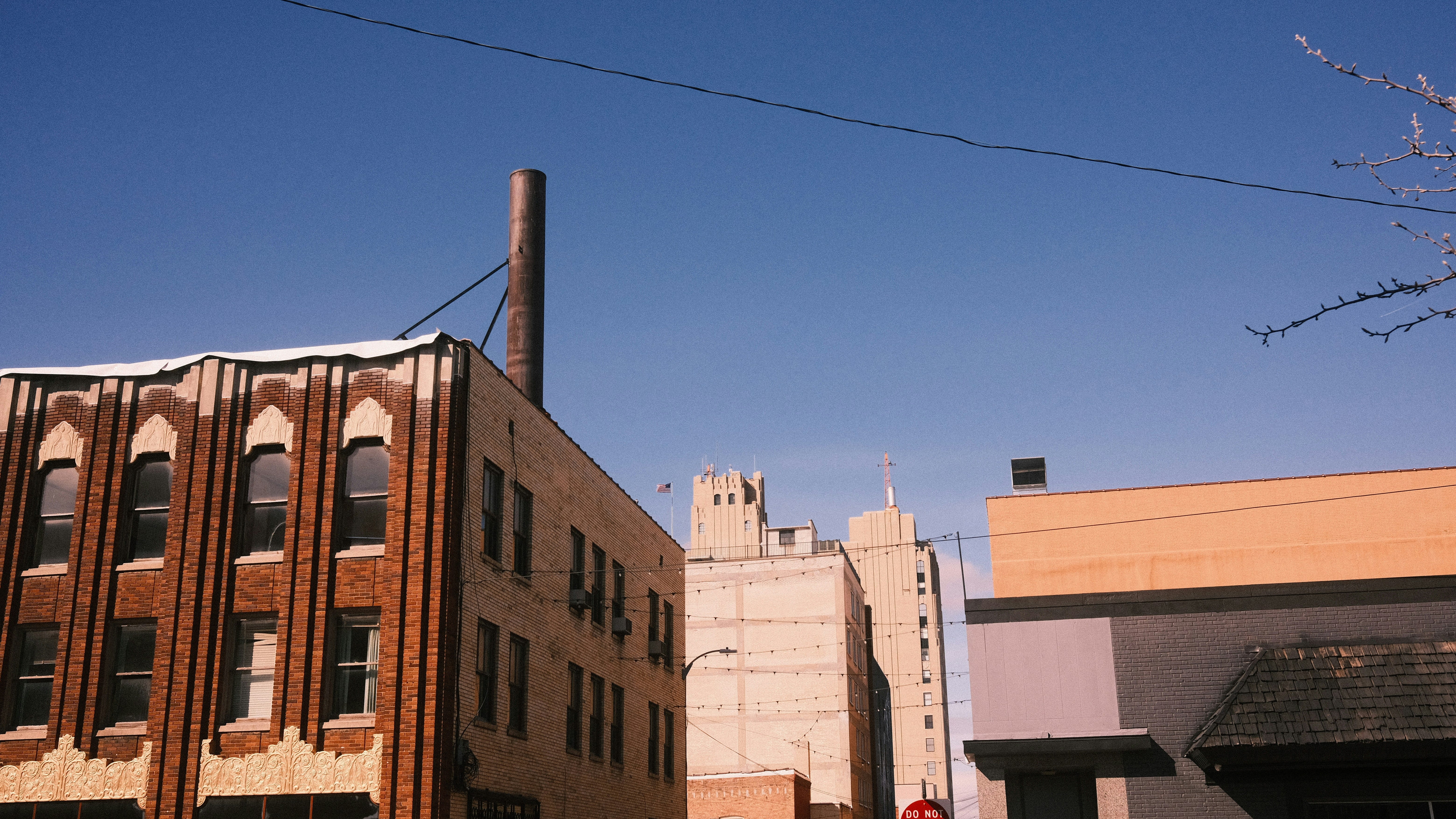
There are thousands of North Avenues in the United States. I was driving across one of them. Maybe I had dropped off another box of Dad’s mystery books. I’m not sure. But I was driving. I started to see things. Life on North Avenue looked a little tired, a little faceless. There were cars parked beside buildings, but you didn’t know whose cars they were, whether they belonged to an employee, an owner, or someone who parked and walked away into some other life. Most of the buildings seemed to sag, though I don’t know why. I don’t know if the sensation came from seeing the uneven parking lots or the brick facades where a few bricks had gone missing. Even the chain business, the ones you see in every town, looked famished. The Dairy Queen, Motel 6, Big O Tires, and others gave you the sense of a falling down. Did I despair? I’m not sure. I was in America. My father was either dead or dying. I was driving his truck, and the radio played Country music classics. Then it occurred to me—unexpectedly and unreasonably—that I could live here, that I could live in this America. Of all things that are incompatible with my present life, it would have been this. I don’t know where the thought came from. It could have come from the losses I carried in that moment. If we lose something, we desire to replace it, though not necessarily with the same thing. Maybe this America is what I could understand.
North Avenue carried on and so did I. Some blocks were in better repair than others. There were drifters and homeless people. Most of them didn’t glance at anyone driving or anyone passing by. They focused on whatever was missing from their hands, their shoes, the fabric thinning on their shirt sleeves. There is a difference between being poor and being a threat, and most of us tend to confuse the two, even when we know we shouldn’t. Dad’s old truck was full of gas. Country music played on the radio. I knew the way to the river where Dad and I once fished. I knew the way to the desert. I knew the way to where I grew up and to the mountains across the valley where I learned to hunt and where I learned to fly fish mountain creeks. I drove and pretended that I had a friend who lived nearby, and that’s where I was going. I was going to see a friend. I could hold over for a few days. I could write at her place or wherever she could put me up. Maybe I could cook a steak. Maybe I could hold over at her place until autumn, which was a couple of months away. When autumn came, I could take another drive. I could find another place to stay because autumn is too beautiful to miss. I could hold over for the winter, too. Of course, I would be back on North Avenue. My mother lives just a few blocks from North Avenue. Whenever I went to visit, Mom and I could cook lunch together. We could drink coffee in the morning. She could tell me what she had planned for the day. We could talk about Dad and laugh and remember or be hushed by some improbable memory. Then maybe some night, we’d walk outside and my mother would notice the moon high among the clouds. She would say again that it was the most marvelous moon she had ever seen. And I would agree with her.
So it was that I drove between block after block of traffic lights and my imagination. I noted a few of the signs:
Malibu Pool & Patio
Mr. Payroll
Big Day TV and Internet
Saucy Lulu
Frenchy’s Salon
Boudoir Lash Lounge
Lizard Lounge Vapor
Lifespan Psychiatry
Shattered Image
These were the last of the holdouts, these businesses. The fractured parking lots. The unsteady facades. Yet the signs stood. Short ones, wide ones, tall ones, neon ones, tin ones, some freshly painted, others nearly scrubbed away, and yet all of them stood in this settlement of near ruins. It was a wonder, too. The dilapidation and disrepair were as real as anything, but the signs were there.
Months later, after returning home to Norway and thinking about the drive along North Avenue, I opened a favorite book. The book is Christopher Woodward’s In Ruins. I sought a reference for what I had been seeing and feeling that day. Quoting Denis Diderot, Woodward reminds us of what we have experienced while driving our North Avenues:
The ideas aroused within me by ruins are lofty. Everything vanishes, everything perishes, everything passes away; the world alone remains, time alone continues. How old this world is! I walk between these two eternities. . . .What is my ephemeral existence compared to that of this crumbling stone?
I don’t remember the moment when I decided to drive back to Mom and Dad’s house. I like to believe that Dad hadn’t passed yet. I like to believe that he was at home, in his recliner, and reading. But before heading back, I turned around on North Avenue and drove to the Dairy Queen. I pulled into the drive-up. Dad’s old truck waggled through the potholes. I ordered a chocolate shake, which was for Dad. We no longer insisted that his diabetic medication mattered, because it didn’t. After I got home and handed Dad his milkshake, Mom and I helped him to the patio. We waited for the evening. We would see sunset announced in the clouds. I would say to Dad, “You know I went to the bookstore.” “I do,” he would say. “Well, I can hardly believe it, but I found a copy of Olav Hauge’s poetry.” “You did?” “I did. I also found an edition of Osip Mandelstam’s poetry, too.” “You did?” “Yes sir.” “Have you started the book I gave you yet?” “No sir, not yet, but I will.” “What’s that one called, the book I gave you?” “Madam.” “That’s right, that’s right. Madam.” “The full title is Madam: The Biography of Polly Adler, Icon of the Jazz Age.” “I bet it’s a good one, son.” It was the last book my father gave to me.
Near dark, we go back inside the house. Mom and I helped Dad into his recliner. We talked about what movie we could watch later. We’d find something. Something old, something new. We’d find something. Dad would finish his milkshake from the Dairy Queen, and we’d go on. We’d go on. Our ordinary souls.
Damon Falke is an American writer living in northern Norway.
 | A guest post by
|
A real stunner. So much is covered, effortlessly. Or so it seems.
a true love letter to your dad, damon. thank you for sharing these most intimate, yet commonplace moments with us. beautiful, tender writing, as always.