


Dear Republic,
The ever-intrepid Bart Schaneman sits down with the man, the myth, the legend Scott McClanahan in the midst of his whirlwind book tour for his new novel Fights!—which, judging from the packed event photos, has been taking Substack and the literary world by storm.
—ROL
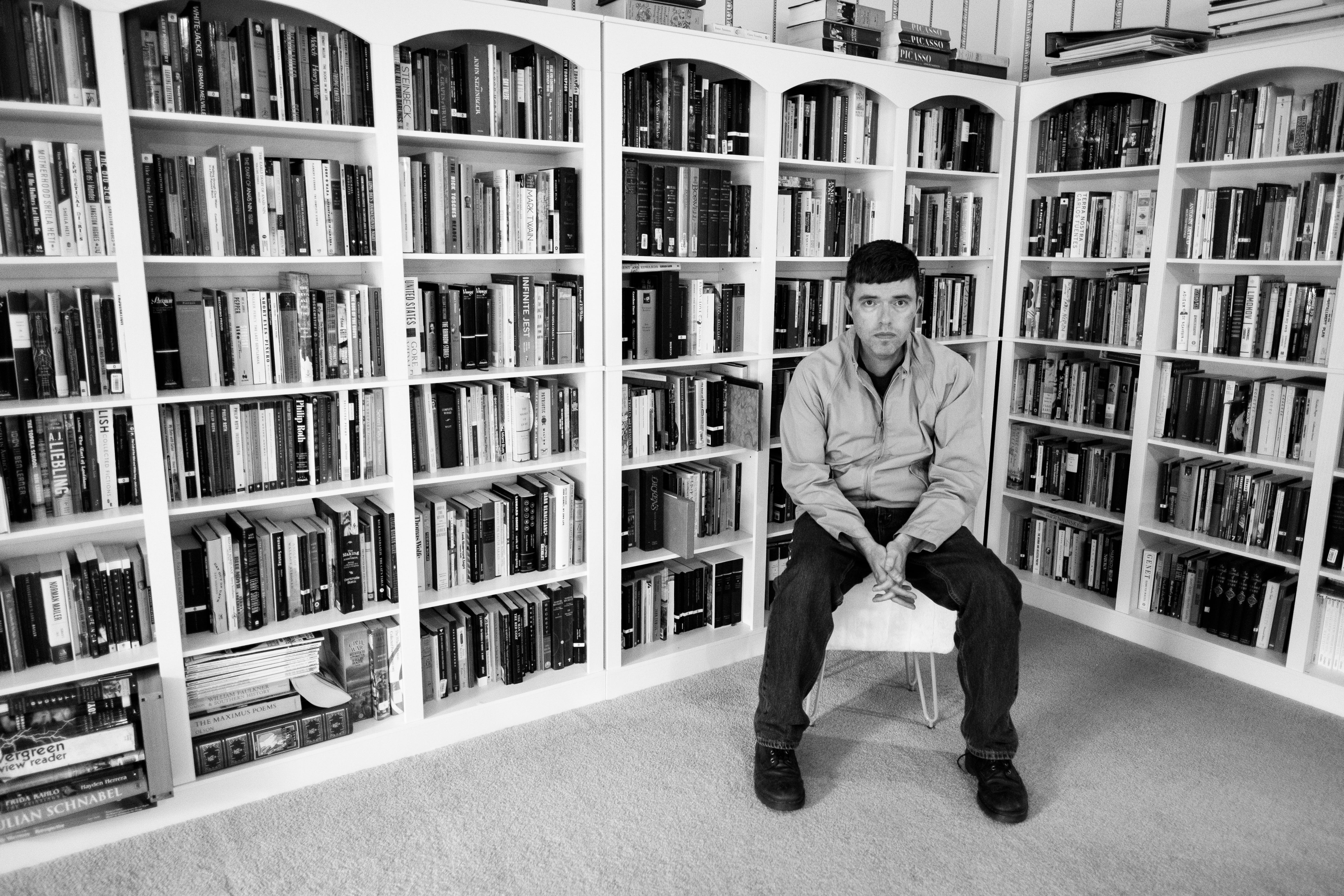
SCOTT MCCLANAHAN: THE INTERVIEW
I’ve admired Scott McClanahan’s writing for at least a decade. His writing is straightforward, direct, and clear. He writes what he knows with humor and grace in a way that feels more rooted in an oral tradition than in a creative writing workshop. His books are the kind that you finish quickly, then reread immediately.
McClanahan built his reputation by giving powerful performances. His new book, Fights!, published July 14 by Chelsea Hodson’s Rose Books, is about many things, but the main thread is his relationship with Giancarlo DiTrapano, the publisher of Tyrant Books who died in 2021. Somewhere around 2010, DiTrapano saw a video that HTMLGIANT posted of McClanahan reading his story “Kidney Stones” and reached out to him. That started their friendship and ultimately led to DiTrapano publishing McClanahan’s The Sarah Book in 2017. That novel was a huge success by indie lit standards. It was written up in a bunch of major news outlets. It’s a great book. Honest. A true piece of writing that only he could have written.
I’ve never seen McClanahan read in person, but from what I’ve seen online, he performs with the cadence of a street preacher. Like he’s moved by the spirit of the story he’s telling. That biblical undercurrent in his writing is a running joke in Fights!, where DiTrapano tells McClanahan to lay off it a little bit and, meanwhile, the narrator still uses it to tell the story. That style, drawn from the Bible and oral lore, feels true to McClanahan’s West Virginia upbringing and the way he likes to talk about how the mountains and land there are some of the oldest in the world. It gives even more weight to what he achieves when he writes about the place that he knows.
Not to say that I consider McClanahan a naturalist writer. In Fights! and The Sarah Book, he doesn’t write about the flora and fauna of West Virginia. He writes about people and what has happened around him in a way that feels like you’re going for a long drive and he’s sitting in a car telling you stories. The brilliant thing about McClanahan focusing on DiTrapano is that they’re both from West Virginia, so McClanahan is able to tell a story about another West Virginia character. They came from similar soil, and that gives another layer of meaning to the story.
It feels a little like what Faulkner might write if he were writing first-person fiction in the twenty-first century—connected to a region through its people and past. McClanahan has said he dislikes the label “autofiction,” but it’s the easiest category for his books. That’s why I asked whether he ever sees himself moving toward something more like Faulkner, Stegner, or Steinbeck—writers rooted in place who invented families rather than writing directly about themselves.
There are also a lot of comedic fights that happen between the Scott and Juliet characters that are told in a way that is hilariously absurd. Who among us has not dumped chili on our partner’s head during an argument?
Anyway, McClanahan’s a great writer. He deserves all the attention he’s getting right now. This book is just as powerful as The Sarah Book. He earned all the success that he’s getting. He’s a real one.
In a conversation with The Republic of Letters, McClanahan discussed writing about his life, West Virginia, and how to keep it simple.
Can we begin by talking about autobiography? When I was doing research for this, I listened to a podcast you did with Sean Thor Conroe back in 2020, and at the time it sounded like you wanted to move away from writing about your life. What changed your mind?
I think it’s easy to say stupid stuff in interviews, and I’ve kind of made a life of it. At the time I just wanted to give myself 10 years just to write, become different, etc. after The Sarah Book. That’s what I did in the beginning and why I was able to publish five books in five years from 2012-2017. So yeah, I was working on my epic history of West Virginia called he sent darkness, and I was sort of sick of my old first-person voice. But then Gian died, and so I returned to it.
Of course, I had a whole philosophy of a new third person. A reported third person like you find in biography and history and that writers like Labatut and Echenoz have been messing around with in fiction. I also wanted to try a third person that slowly reveals the first person inside of it. But like most philosophies, it was mostly bullshit. It either works or doesn’t. And sadly, I think my 10 years in the wilderness can only be described as a failure.
But then sometimes you end up winning by losing. More tears have been shed over answered prayers than unanswered ones. And I stole so much stuff for Fights! from those experiments.
I thought you might say that the Gian story was just too good not to write. You have this character who is also from your part of the world — it seemed to me natural to want to tell this story. Will you go back to the epic history project now? I’d love to read that.
I think that book died for me. But I kept a few chapters that almost worked as individual stories. For instance, I’m putting out a Collected Stories with WVU Press next year and there’s a bunch of chapters from it in that book. With he sent darkness, I wanted to give birth to myself in that book, and I did that by writing the story of my birth and also my second birth. I kind of lost interest in the book after that. However, I kept that chapter and some others for the WVU Press book.
West Virginia and your strong sense of authority when you write about place feels likes a central quality in your writing. How do you think your writing would look if instead you lived elsewhere, away from the part of the country you know so well?
I have no clue to be honest. I guess geography can be fate but I’m not sure. I love all those English psycho-geographers like Ian Sinclair, Alan Moore, David Seabrook, Peter Ackroyd. But I don’t believe in places so much as the people who live in the places. I mean geologically speaking, this is some of the oldest ground in the world. So is that energy in me?
I guess you can put Isaac Bashevis Singer in Poland or New York, and it doesn’t matter much. Of course, he needs his people to make sense though. But the place, maybe not so much.
Back in the winter we had this ice storm and were trapped in our house for about three days. I live with my mother-in-law now, and I was freaking out about not being able to get out. Like the roads were impassable. So I called the local police and made up this lie, “I have an elderly mother-in-law and we need our road cleared in case of a medical emergency” (Of course, she’s in perfect health). About 15 minutes later the snow plow showed up, and I talked the guy into plowing our road, even though he didn’t want to. He was like, “I’m worried I’m going to get my truck stuck up if I do,” and I was like, “Oh hell buddy, you’re not going to get stuck. I have an elderly mother-in-law living with me.” Well it wasn’t five minutes and guess what? He almost immediately got that giant snow plow stuck in our driveway. And what did I do? I just went inside and hid. I kept looking out the window and seeing the snow plow guys cussing me. It took about two hours for a backhoe to pull them out.
After it happened, I told my friend Bud Smith about it and he said, “This feels like a Scott McClanahan story.” So maybe the place does give me something.
I think the energy of the place is in you. It comes through in your writing, and not in a way where you’re like describing the plants and the landscape and the weather patterns. It shows in your understanding of the people and how they act and talk. How do you think about your sense of observation and how it connects to the culture around you?
Oh boy, I don’t know. I guess observation is worthless without creation. I love in Plutarch’s Parallel Lives how he uses small details that reveal something about the historical person he’s writing about. Most fiction feels inundated with description to me. I fricking drown in it. I think you need to show something simple. The hardest thing in the world is to be simple. Before Stendhal sat down to write, he would read an hour or so from the French civil code. The most boring prose around. Because the utmost goal of the writer is clarity. It’s maybe one of the only things we have in our toolbox, and I’m amazed by how many writers seem unaware. It’s like they’re living in 1843 and writing one of those triple-decker, subscription novels.
I want people to even forget they’re reading a sentence.
Another writer might have taken this material and used it as an opportunity to wallow in despair or dissatisfaction. Your writing’s not like that. You’re able to express in a comedic way how battles with your partner and how you get through them are part of what makes a relationship strong. How do you think about humor and absurdity in literature?
I just think you want all of the human responses, don’t you? Laughter and sadness and sweetness and horribleness. There’s a John Berger quote I love, “Imagination is not, as is sometimes thought, the ability to invent; it is the ability to disclose that which exists.” These things are naturally occurring in life, there’s no need to think about them or imagine them. They just are.
For instance, I got a vasectomy a few years ago. My wife Juliet was getting sick of dealing with birth control, and so she asked me to do it. And even though I didn’t really want to, I decided to go ahead and take one for the team. I read so many articles about how this isn’t a big deal etc. it’s relatively painless. I went to one doctor who was going to put me fully under anesthetic and I was like, “I don’t know if I want completely knocked out for a relatively simple procedure.”
Then I found another urologist who would do it outpatient. And let me tell you. This lady treated me like a fucking farm animal, and even with all the local anesthetic, I could feel it. And there was so much blood! I finally understood why the other urologist wanted to put me completely under. I took a picture of the bloody surgical drape and sent it to Juliet on her way to pick me up.
The ride home was so painful, and Juliet whispered to me like I was a soldier with PTSD, but now we just laugh about it. I mean life is ridiculous. Its meaninglessness is holy. So I think if you’re seeing properly, absurdity and humor are going to be inside of everything.
Ah, yeah, Berger’s Ways of Seeing also seems like something you’d be familiar with. I watched an old interview you did with Juliet on YouTube, and you said something that’s been rattling around in my head. You were talking about growing up in a place where you didn’t know anyone else who wanted to write. You told the story about winning the newspaper contest and not wanting anyone to know so you wouldn’t get beaten up. How do you think getting through that and coming out on the other side has helped you as a writer? Or did it help? Maybe it didn’t?
I wasn’t doing well in that interview. So most of that is junk. People and especially writers love to feel sorry for themselves. It’s why heartbreak songs will be written until the end of time. I also have this weird contradiction in my character, where I put out stuff, but I don’t want anyone to read it, or god forbid tell me about it. And I still try to be anonymous. Maybe we all need less encouragement, myself included. Everybody wants to write a book, but there are so few readers. So maybe we should start celebrating the true rarity in this life, great readers
Bart Schaneman lives in Seoul, where he works as a journalist. He has a Substack, Life Reports. He’s also the author of the novel The Pot Job (Trident Press).
 | A guest post by
|
👑